

Lot n° 139
Estimation :
50 - 70
EUR
Result without fees
Result
: 140EUR
Pots à tabac - Lot 139
Pots à tabac
Grès fin Sarreguemines seconde moitié du XIXe siècle
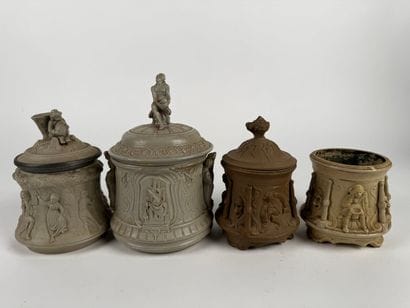
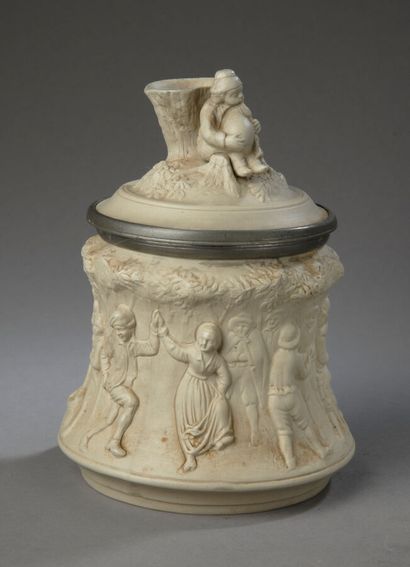
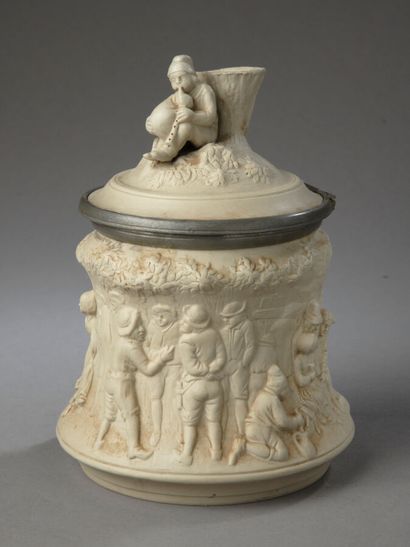
Pot en forme d'urne avec couvercle cerclé d'étain s' ouvrant par une charnière. Sur le corps, un décor en relief d'une kermesse flamande très finement exécuté, montre des scènes de la vie villageoise dans le genre du peintre flamand David Teniers ou Teniens: un couple d'amoureux, un autre dont la femme tire son mari ivre, des musiciens qui font danser un troisième, un groupe d'hommes en train de discuter et un autre qui fait boire une femme. Sur le couvercle, lui aussi très finement sculpté, un paysan appuyé contre un tronc, qui sert de réceptacle à allumettes, souffle dans son biniou.
Marqué dans un cartouche de la lettre M entre les pattes d'un aigle aux ailes déployées qui, comme le pot 208, signe la provenance: Sarreguemines circa 1870.
Grès fin Sarreguemines XIXe siècle
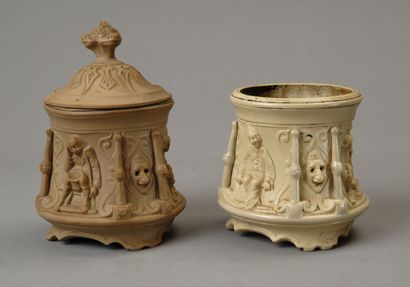
Ces deux pots à tabac, en forme d'urne en grès fin brun pour le premier qui est complet avec son chapeau mais qui ne comporte aucune « marque » et beige vernissé pour le second sans son couvercle mais signé, portent le même décor : sur le corps trois grotesques de la Comedia Del Arte sont séparés les uns des autres par trois séries de deux colonnes qui entourent le masque de la comédie. Sur le couvercle pointu, le bouton de préhension est constitué de l'adossement de trois masques d'animaux.
Marqué sur le fond du pot beige de la lettre S gravée et, dans un sceau, de l'aigle napoléonienne la tête tournée vers la droite, reposant sur une branche de chêne et une autre de laurier, qui entourent le chiffre 51, probablement le numéro du moule.
Angleterre ?
Gros éclats au couvercle.
H 20cm
Grès fin gris vernissé circa 1860
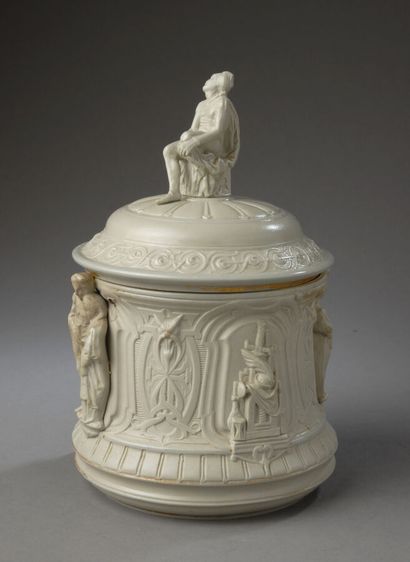
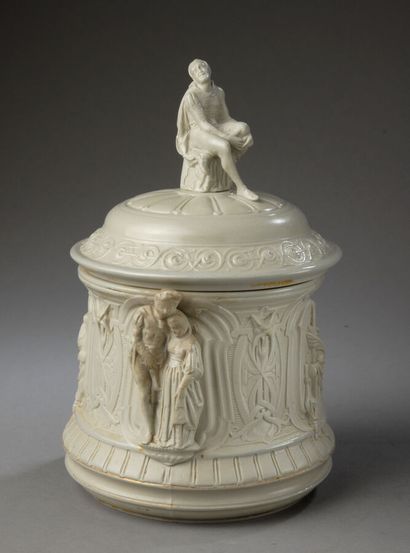
Rare pot à tabac gris perle illustrant le mythe de Faust. Le bouton du couvercle est un Mephistophélès ricanant, assis, les jambes croisées.
Quant au couple Faust et Marguerite, il est représenté, à deux reprises, sur le corps du pot et dans deux attitudes différentes, séparées l'une de l'autre par des compositions allégoriques figurant deux épées, un manteau et un chapeau à grandes plumes, une presse d'imprimerie et un sablier pour mieux évoquer le temps qui passe. Décoration très soigneuse avec traces de dorure.
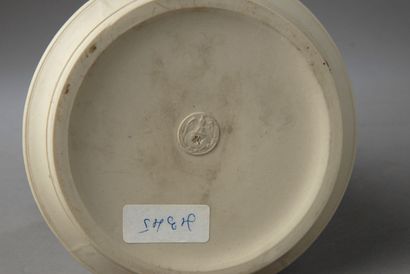
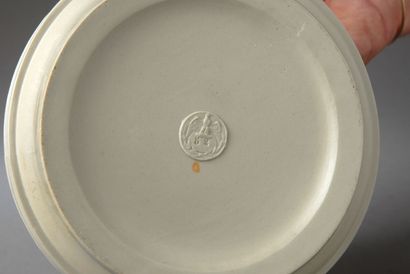
Sur le fond, un cartouche portant l'aigle aux ailes déployées enserrant, dans une corne de laurier, le numéro 52, (qui peut être le numéro du moule utilisé), signe sa provenance: Sarreguemines.
Légers éclats.
H 24cm
My orders
Sale information
Sales conditions
Return to catalogue